
As natural prey animals, guinea pigs have an instinctual need for security. In the wild, South American cavies navigate through dense grass tunnels and burrow under fallen branches to evade aerial and ground predators. When housed in an open enclosure without adequate shelter, guinea pigs experience chronic cortisol elevation, which weakens their immune response.
Beyond providing psychological comfort, the items placed in a guinea pig’s habitat serve a critical physical health purpose: dental attrition. As explained in our veterinary guide on how to properly care for a guinea pig’s teeth, cavies possess open-rooted elodont teeth that grow non-stop. Providing untreated, pesticide-free wooden hideouts and fibrous chew toys prevents painful dental spurs and malocclusion.
💡 Essential Hideout & Toy Rules
- The “N+1” Hideout Rule: Always provide at least one hideout per guinea pig plus one extra (e.g., 3 hideaways for 2 pigs) to prevent resource guarding and dominant chasing.
- Prioritize Two-Door Shelters: Dominant cavies can corner subordinate cage mates in single-opening houses. Bridges and two-door tunnels allow easy escape routes.
- Avoid Toxic Glues and Softwoods: Select only untreated kiln-dried pine, birch, apple orchard wood, or willow. Avoid cedar and painted wood with chemical adhesives.
Top 3 Hideouts & Chew Toys Evaluated
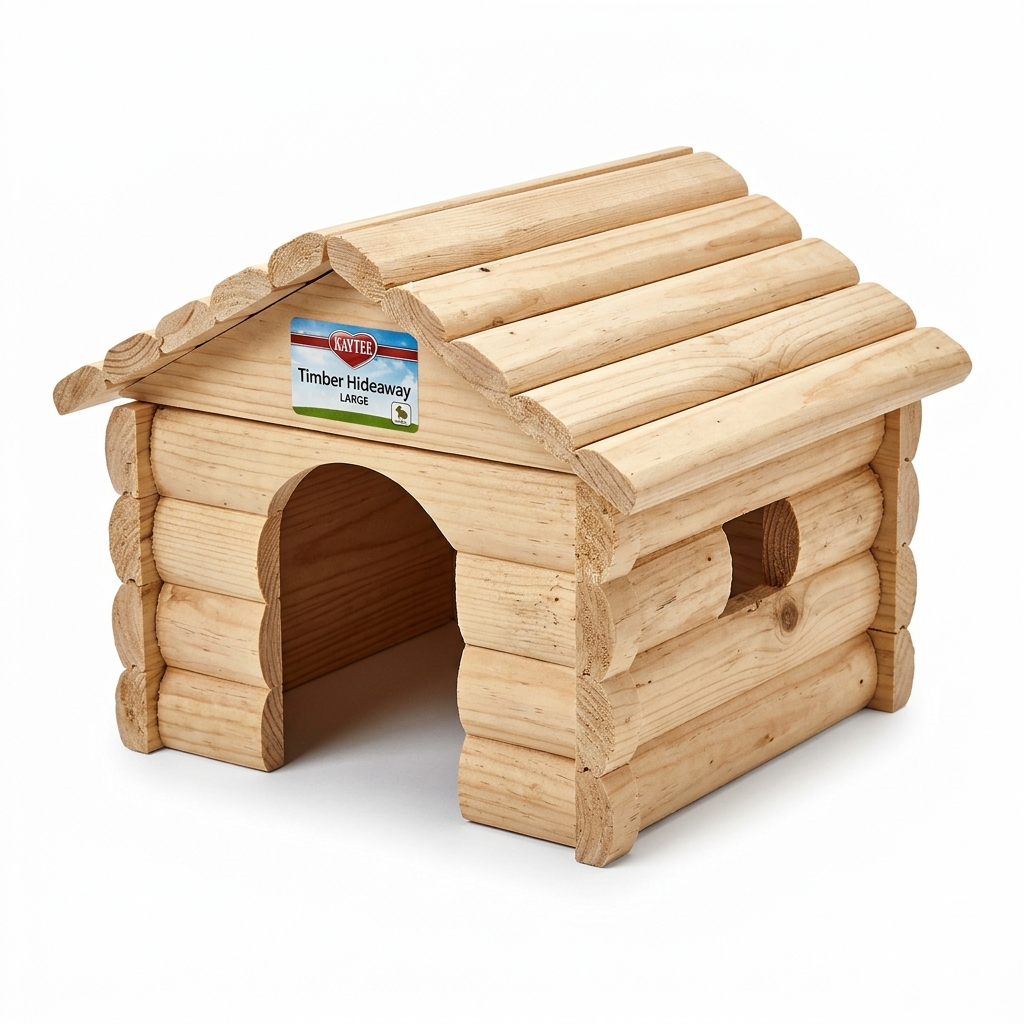
Kaytee Large Timber Hideaway Solid Wood Cabin
Built from solid kiln-dried untreated pine logs. Provides total darkness for resting and a safe, non-toxic gnawing surface that satisfies natural wood-chewing instincts. Flat roof doubles as an elevated perch.
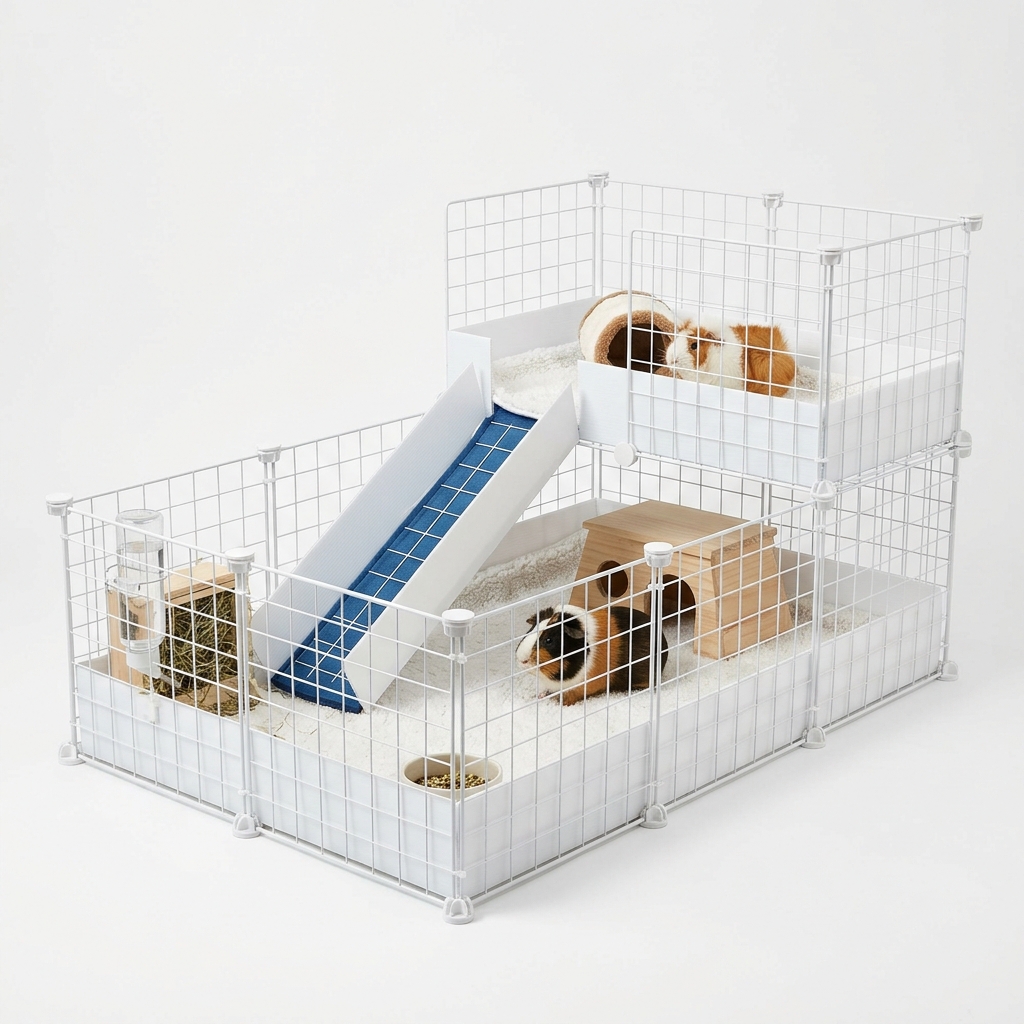
Niteangel Flexible Wooden Tunnel & Bendy Bridge
Strung together on heavy pliable wire, allowing you to bend natural willow branches into an arching tunnel, a ramp divider, or a curved wall. Two open ends eliminate aggressive cornering.
Oxbow Enriched Life 100% Pure Apple Chew Sticks
Hand-harvested natural apple tree branches with crunchy sweet bark intact. 100% free of pesticides, glues, or artificial flavorings. Essential for grinding down front incisors safely.
Safe vs. Dangerous Woods for Guinea Pigs
Guinea pigs explore their world mouth-first. Never place decorative wood or branches from your yard into their habitat without verification:
- 100% Safe Woods: Apple, hazelnut, pear, willow, kiln-dried white pine, and linden.
- Toxic Woods (Avoid Completely): Cedar (high phenolic oils cause liver failure), cherry, plum, peach (contain cyanogenic glycosides), fresh unseasoned pine, oak (high tannins), and treated lumber.
Frequently Asked Questions
Are fabric fleece tunnels safe for guinea pigs?
Yes, fleece tunnels and fabric cuddle cups are fantastic for comfort, provided your guinea pigs do not chew and swallow fabric fibers. If you observe fraying or ingestive gnawing on fabric seams, switch immediately to solid wooden houses.
Can I give guinea pigs cardboard boxes?
Plain, unprinted brown corrugated cardboard boxes with all shipping tape, staples, and plastic labels removed make great budget hideouts. Cut out two entrance holes for safety.

