
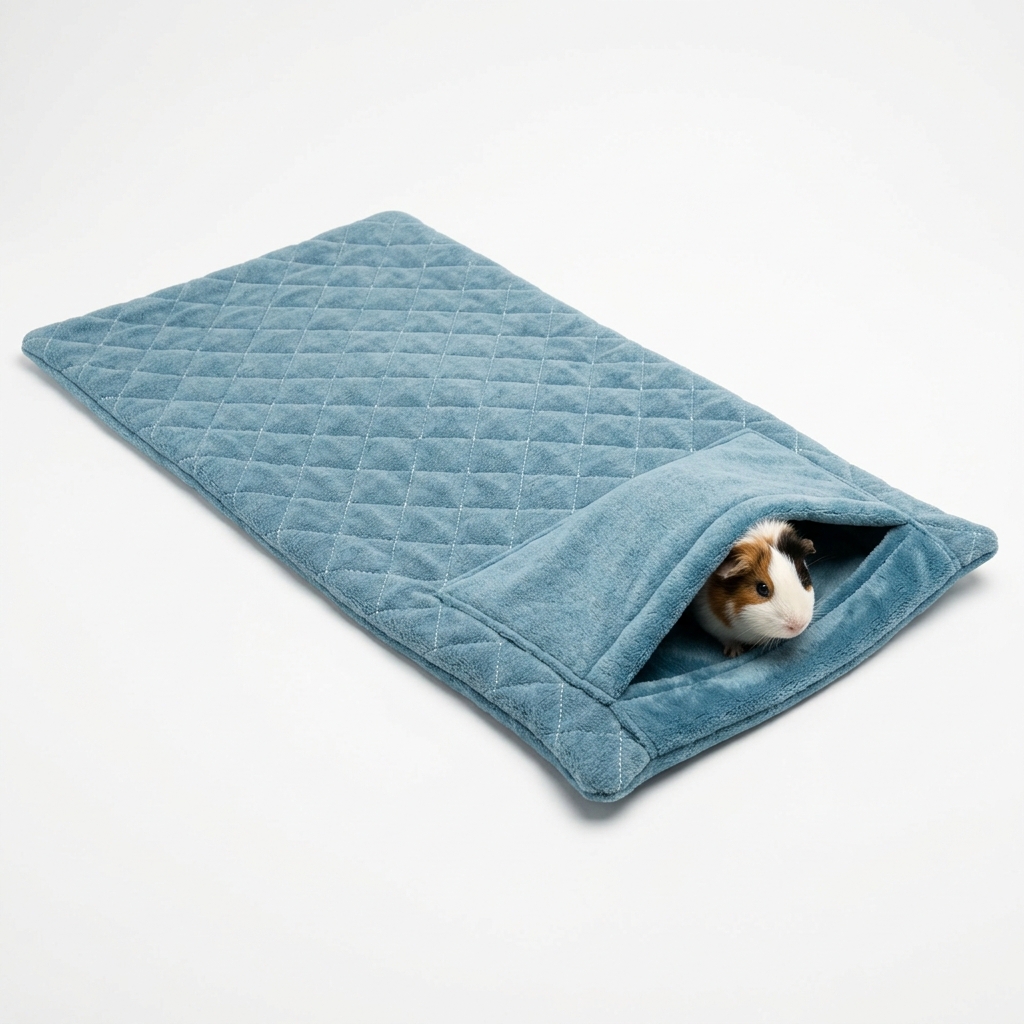
Bedding is usually the single largest recurring expense of guinea pig ownership. Traditional disposable paper bedding costs $40 to $70 per month for a properly sized cage, creates mountains of trash, and often produces airborne dust that irritates sensitive cavy respiratory systems.
In recent years, the guinea pig community has overwhelmingly shifted toward washable fleece cage liners. As discussed in our detailed guide on how to effectively control guinea pig odor, modern anti-bacterial fleece wicks liquid urine downward within seconds, keeping the fleece surface bone-dry and your pets healthy.
💡 Bedding & Fleece Key Rules
- Fleece Must Be “Wicked” Before First Use: Untreated fleece naturally repels water. Wash new fleece 2 to 3 times with fragrance-free detergent and white vinegar until water droplets soak through instantly.
- Never Use Fabric Softener: Dryer sheets and fabric softeners coat fibers in hydrophobic silicone wax, destroying fleece absorbency and trapping ammonia odor.
- Avoid Cedar and Pine Wood Shavings: Raw softwood shavings emit toxic aromatic hydrocarbons (phenols) that cause severe respiratory tract damage and elevated liver enzymes.
Top 3 Bedding Options Compared
GuineaDad Premium Bamboo-Fleece Liner
Engineered specifically for cavies with a waterproof bottom barrier and a natural bamboo batting layer that neutralizes bacteria and ammonia. Includes an integrated fleece pocket for burrowing.
Carefresh Complete Natural Dust-Free Paper Bedding
Made from 100% natural reclaimed cellulose fibers. 99% dust-free formula provides 10-day odor control and suppresses ammonia twice as long as pine shavings. Ideal for hay kitchen areas.
Kaytee Clean & Cozy Super Soft Paper Bedding
Expands to 3x its packaged volume. Exceptional absorbency holds 6x its weight in liquid, keeping delicate foot pads cushioned and dry. Pristine white color makes health spotting easy.
How to Maintain Fleece Liners Without Odor
1. Daily Spot Cleaning (2 Minutes)
Guinea pigs poop between 100 and 150 times per day per animal. Use a small hand broom, dustpan, or mini handheld vacuum twice daily to sweep up dried fecal pellets. Fecal pellets on dry fleece do not smell as long as they stay dry.
2. Full Weekly Laundering
Shake the liner outside to remove trapped hair and hay bits. Place inside a zippered pet laundry bag to protect your washing machine. Wash on warm with unscented, dye-free detergent and 1/2 cup of distilled white vinegar in the fabric softener compartment (vinegar naturally breaks down urine salts). Tumble dry on low heat or hang dry.
Frequently Asked Questions
How many fleece liners do I need?
You should own at least 2 liners (3 is ideal). Having two allows you to place a fresh, clean liner into the habitat immediately on laundry day without waiting for the wash cycle to finish.
Can I use puppy pee pads under fleece?
If your fleece does not have a built-in waterproof backing, disposable unscented puppy pads or reusable human incontinence bed pads make an excellent absorbent underlayer. Ensure the fleece is tucked firmly under the coroplast so pigs cannot chew the plastic pad backing.

