
Few household odors are as stubborn, repulsive, and persistent as dried rodent urine. Long after an infestation of rats or mice has been physically cleared from an attic, crawlspace, or basement, the unmistakable pungent ammonia-and-musk stench can linger in subflooring, baseboards, and drywall for months.
The reason standard bleach and household disinfectants fail is simple chemistry: rat urine contains insoluble uric acid crystals and organic pheromone proteins designed to withstand evaporation. As detailed in our guide on how to get rid of the smell of rat urine, true eradication requires a two-step process: pinpointing the exact dried deposits using an ultraviolet blacklight, followed by complete bio-enzymatic digestion.
💡 Quick Urine Elimination Takeaways
- Standard Cleaners Don’t Work: Bleach merely sanitizes the surface; moisture re-activates uric acid crystals, making the urine smell return every humid day.
- 395nm UV Blacklights Reveal Hidden Trails: Rodents dribble micro-droplets as territorial markers. A true blacklight makes these invisible urine trails glow vibrant neon yellow-green.
- Enzymes Must Stay Wet to Digest: Bio-enzymatic sprays contain live non-pathogenic bacteria that consume uric acid. Spray heavily and allow 15 to 30 minutes of dwell time without wiping.
Top 3 Odor Eradication Tools Compared
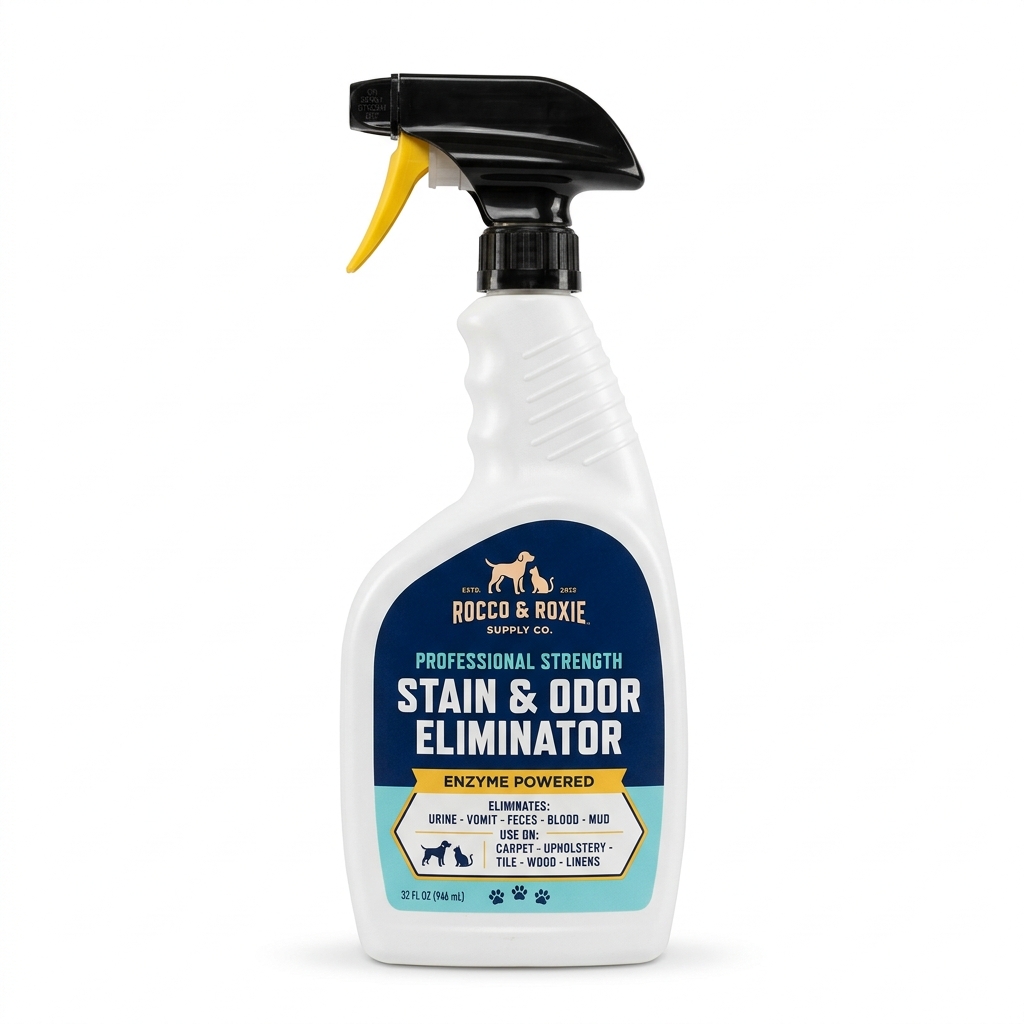
Rocco & Roxie Professional Strength Stain & Odor Eliminator
The gold standard in bio-enzymatic cleaning. Certified CRI-approved formula contains active bacteria that literally devour dried uric acid crystals down to the subfloor level. Safe for carpets, wood, tile, and concrete.
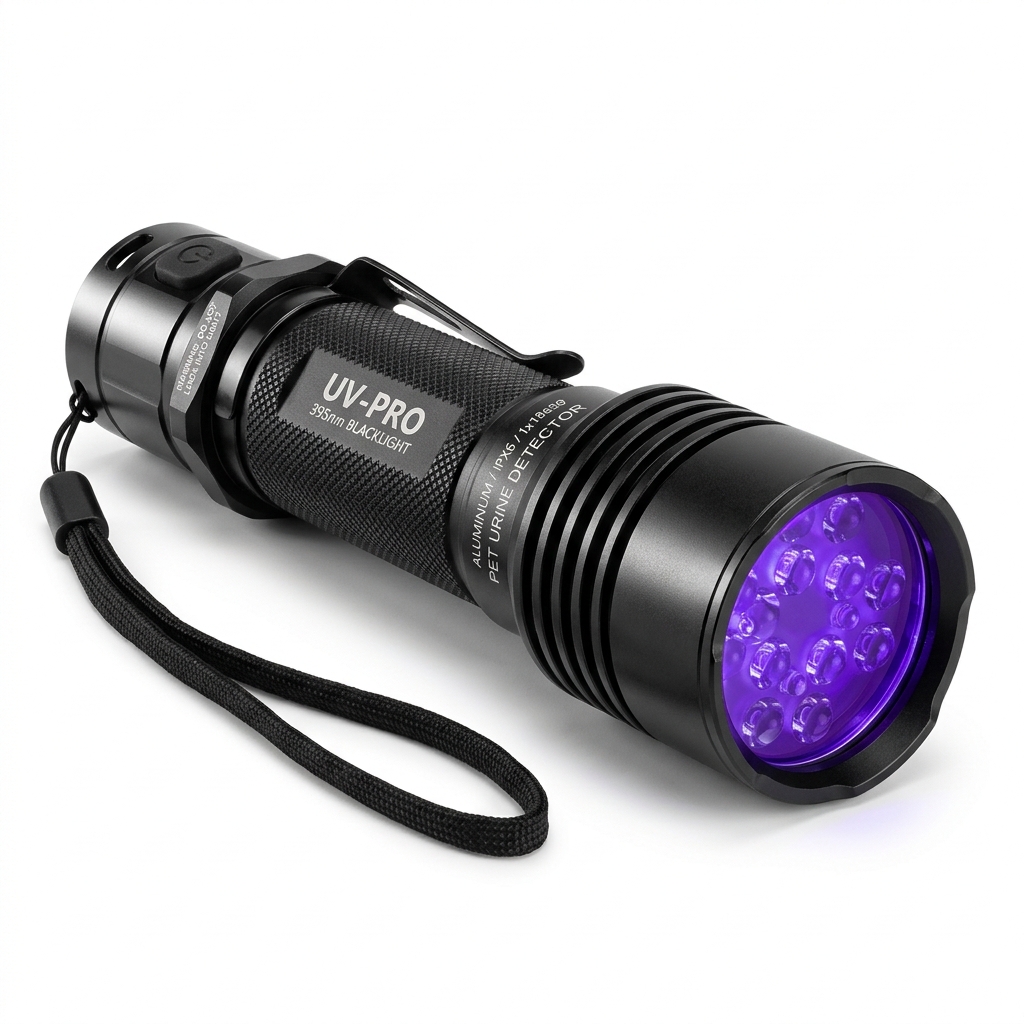
Escolite UV 395nm Blacklight Urine Detector Flashlight
Equipped with 51 high-intensity UV LEDs emitting at the 395nm wavelength. Exposes microscopic rodent urine trails, sebum rub marks along baseboards, and hidden carpet spots in total darkness.
Angry Orange Pet Odor Eliminator Citrus Spray
Cold-pressed commercial citrus formula derived directly from orange peels. Powerful natural d-limonene neutralizes airborne ammonia pungent scents instantly after surface treatment.
Comparison Matrix: Blacklights & Cleaners
Step-by-Step Rodent Urine Remediation Guide
1. The Dark Room Sweep with 395nm UV Light
Turn off all indoor lights and close blinds. Hold the Escolite UV Flashlight roughly 1 to 2 feet above the floor. Rats rely on continuous pheromone trails known as “urine dribbles” to navigate along walls. Under 395nm light, dried urine fluoresces with a distinct pale yellowish-green glow. Mark these spots with painter’s tape.
2. Never Vacuum Dry Droppings
Health warning: Dry rodent droppings and urine dust can aerosolize pathogens such as Hantavirus or lymphocytic choriomeningitis (LCMV). Never sweep or dry-vacuum. Always spray the contaminated area with an enzymatic solution first to saturate the material before wiping it up with disposable paper towels.
3. Deep Enzyme Saturation
Spray Rocco & Roxie generously over the marked spots until saturated. Because enzyme-producing bacteria require moisture to multiply and metabolize uric acid, cover heavily soiled wood or carpet patches with a damp towel or plastic wrap for 1 to 2 hours. This prevents premature evaporation and ensures deep fiber penetration.
Frequently Asked Questions
Why does the rat urine smell return when it rains?
Uric acid crystals are hygroscopic, meaning they absorb airborne humidity. When indoor humidity rises during rainy weather, dried urine crystals re-hydrate and release pungent ammonia gas. Only enzymatic breakdown or sealing porous subflooring will stop this cycle.
Does bleach kill the smell of rat urine?
No. Bleach disinfects bacteria but chemically reacts with ammonia in rodent urine, producing hazardous chloramine vapors. Furthermore, bleach does not break down uric acid crystals, leaving the odor profile intact once dry.
Can enzyme cleaners ruin hardwood floors?
When used as directed, professional enzyme cleaners like Rocco & Roxie are safe on sealed hardwood. Wipe away excess liquid after 15 minutes to avoid moisture pooling on unsealed wood seams.

