
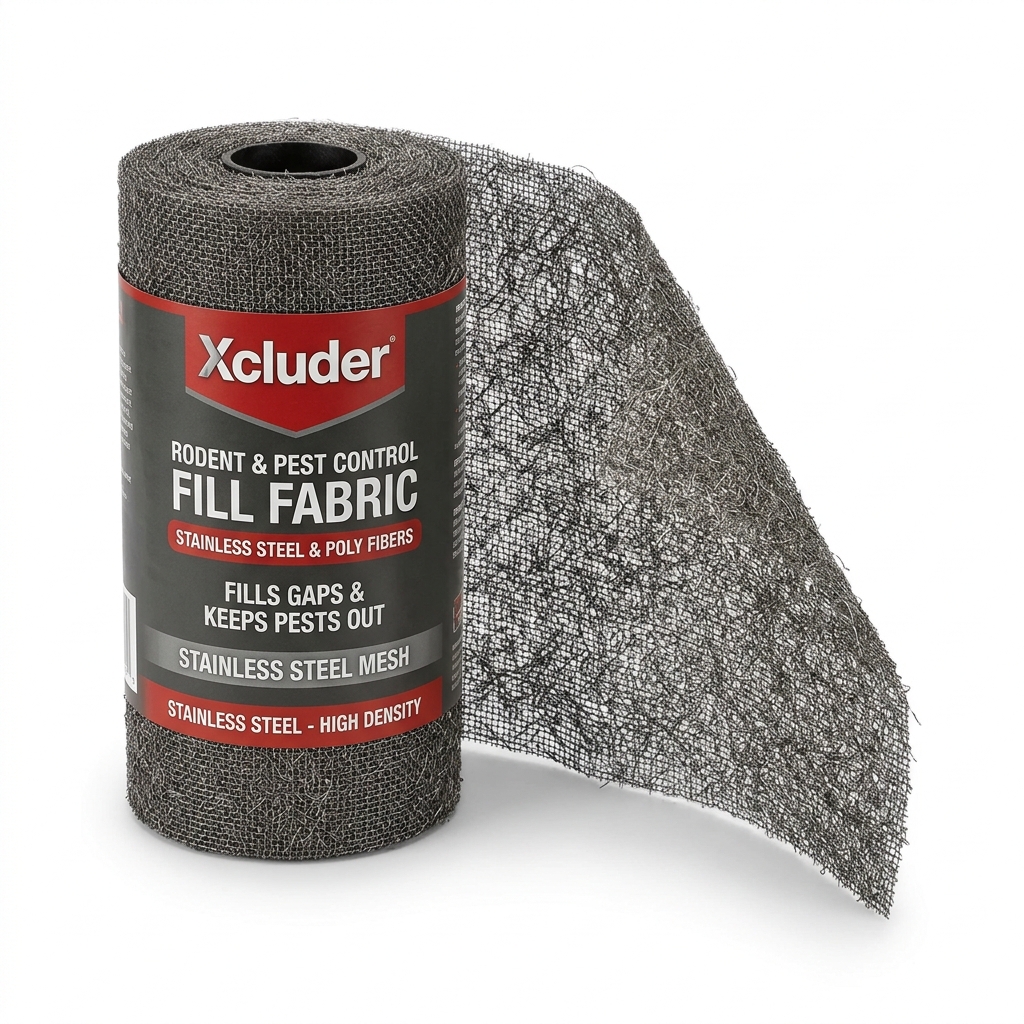
Rats and mice don’t need a welcome mat to enter your home. A young mouse can slip through an opening as narrow as a pencil (1/4 inch), and rats can easily chew through wood, drywall, and plastic plumbing lines. As we examined in our guide on whether rats can eat through walls, physical barrier materials must be hard enough to resist teeth with 24,000 PSI of biting pressure.
Professional pest-proofing relies on non-corrosive metals and specialized poly-fibers that lodge painfully in rodent jaws without rusting or degrading over time.
💡 Exclusion Rules
- Never Use Regular Steel Wool: Standard kitchen steel wool oxidizes, rusts, and turns into reddish dust within one rainy season. Always use 316-grade stainless steel.
- Pack Before Foaming: Never rely on foam alone. Pack mesh first, then apply pest-block foam over it to seal air drafts.
- Protect Weep Holes: Brick weep holes allow wall cavities to breathe. Use breathable stainless mesh to prevent mice without trapping moisture.
Top Exclusion Hardware
Best Overall
Xcluder Rodent Control Fill Fabric
The industry standard stainless steel mesh. Won’t rust, discolor brick, or compress over time. USDA/APHIS tested and approved.

