
Key Takeaways
- Dichromatic Vision: Rats possess two types of color-sensitive cone cells, meaning they are red-green colorblind.
- UV Sensitivity: Unlike humans, rats can perceive ultraviolet (UV) light, helping them navigate and track urine trails.
- Blurry World: Their visual acuity is much lower than humans; objects appear blurry, relying heavily on motion and whiskers.
- Practical Application: Understanding their sight helps in choosing safe cage accessories, toys, and setting up their living environment.
When we look at our pet rats scurrying around their cages, exploring tunnels, and sniffing out treats, we often wonder what kind of world they see. Humans experience a vibrant spectrum of millions of colors, but how does a rat’s visual system stack up? If you have ever asked yourself can rats see color, the answer is both fascinating and surprising. As responsible pet owners and rodent enthusiasts at Rodents Info, we want to help you understand your pet’s sensory experience to provide the best possible care and enrichment.
The Anatomy of Rat Vision: How Their Eyes Work
To understand what colors rats can see, we have to look at the biological architecture of their eyes. Just like humans, rats have retinas packed with two main types of photoreceptor cells: rods and cones. Rods are responsible for vision in dim light and detecting motion, while cones are responsible for color vision and sharp detail in bright light.
While human retinas feature three types of cones sensitive to red, green, and blue light (trichromatic vision), rat retinas only have two types of functional cones (dichromatic vision). This means their color spectrum is significantly limited compared to ours. Evolutionary speaking, this makes sense: as nocturnal and crepuscular (active at dawn and dusk) animals, survival for wild rats depended more on detecting motion and navigating in low light rather than admiring a colorful sunset.
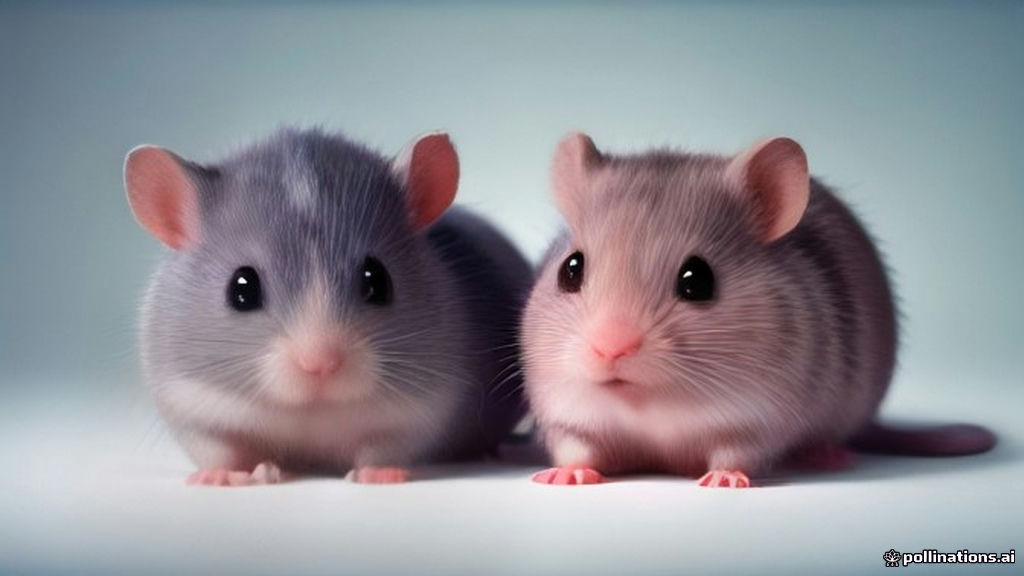
What Colors Can Rats Actually See?
Scientific studies on rodent vision reveal that rats are essentially red-green colorblind. Their dichromatic visual system is tuned to two primary regions of the light spectrum: UV-blue light and green light. Let’s break down how specific colors appear to a rat:
- Blue and Ultraviolet: Rats see blue exceptionally well. They are also unique because their lenses let ultraviolet (UV) light pass through to the retina. To a rat, UV light glows brightly, which plays a massive role in their social communication (such as tracking urine trails).
- Green: They have good sensitivity to the green portion of the spectrum. Green objects and vegetation are distinguishable within their visual limitations.
- Red and Orange: Long-wavelength colors like red and orange appear as dark shades of gray or black to a rat. They completely lack the red-sensitive cone receptors needed to register these hues.
- Yellow: Yellow falls in a middle ground and is likely perceived as a washed-out green or yellowish-gray.
Comparison Table: Human vs. Rat Vision
| Visual Feature | Human Vision | Rat Vision |
|---|---|---|
| Color Spectrum | Trichromatic (Red, Green, Blue) | Dichromatic (UV-Blue, Green) |
| Ultraviolet Light | Blocked by the lens | Visible (penetrates the lens) |
| Visual Acuity | Sharp and detailed | Blurry (approx. 30x less sharp than humans) |
| Field of View | ~180 degrees forward | Nearly 360 degrees (panoramic) |
| Low-Light Vision | Poor | Excellent (rod-dominated retina) |
Beyond Color: Other Limitations of Rat Vision
Color is only one component of sight. Even though we now know the answer to whether rats see color, their overall visual experience is vastly different from ours in several other ways.
1. Blurry Acuity and Depth Perception
Rats have very poor visual acuity. To a rat, the world is remarkably blurry—roughly 30 times less sharp than what a human with 20/20 vision sees. If you stand a few feet away from your pet rat, they may not recognize your facial features visually; instead, they rely on your scent and the sound of your voice. Their depth perception is also quite limited unless objects are very close.
2. Panoramic Vision
Because their eyes are set on the sides of their head, rats enjoy a nearly 360-degree panoramic field of view. This evolutionary adaptation helps them spot predators approaching from any angle. However, the trade-off is a very narrow binocular vision zone directly in front of their noses, which forces them to bob their heads up and down to gauge distances.
How Rat Vision Impacts Their Care and Environment
Knowing how rats perceive color and light allows us to optimize their living spaces. Here are a few practical applications for rat owners:
- Cage Accessories & Toys: Don’t stress too much about buying color-coordinated toys for your rats. While colorful plastic houses and ropes look appealing to you, your rat cares far more about texture, scent, and safety than whether a toy is neon pink or bright blue.
- Lighting Considerations: Avoid keeping your rats in harsh, glaring direct sunlight or overly bright fluorescent lighting. Because their eyes are adapted for dim light and are sensitive to bright environments, soft, ambient room lighting keeps them comfortable.
- Relying on Other Senses: Remember that vision is secondary to a rat’s sense of smell, hearing, and touch (using their sensitive vibrissae or whiskers). Engaging these senses with foraging toys, interesting substrates, and pleasant vocal interactions will make them much happier than visual stimuli.
Conclusion
So, can rats see color? Yes, but on a much more limited scale than humans. They live in a dichromatic world dominated by UV-blue and green tones while remaining blind to red and orange. Coupled with blurry visual acuity and a reliance on panoramic motion detection, their eyes are finely tuned for survival rather than artistic appreciation. By understanding how your pet rat views the world, you can design a more stimulating, comfortable habitat tailored to their unique sensory needs.

